Halida Boughriet
Biography
Recherche & création
See the full program for Wednesday, November 18, 2026, the first day of the 4th edition of the Francophone Days on Research in the History of Photography. Access Thursday's 19 November event via this link.
Every two years, the Institut pour la photographie organizes a two-day event featuring discussions and networking opportunities for researchers from the French-speaking world, focusing on topics related to research in the history of photography.
The 4th edition of these Days, with the theme The Expanded Field of Photography. Toward a Plurality of Subjects, Approaches, and Practices, is being offered as part of the celebration of the The Bicentennial of Photography .
Servane De Landsheer, Secretary General of the Cité internationale de la langue française, Anne Lacoste, director of the Institut pour la photographie Olivier Lugon, professor at the University of Lausanne in Switzerland, co-editor-in-chief of the journal Transbordeur. Photography, History, Society
Moderated by Vincent Lavoie, professor and chair of the Department of Art History at the Université du Québec à Montréal (Canada)
↘︎ Florence Cardenti, visual artist - Bringing Out the Relief: Experimentation and the Genealogy of a Volumetric Photograph
She worked for 15 years in multimedia project design and image technologies before devoting herself entirely to artistic creation. Her projects challenge our assumptions shaped by systems of representation such as history, cartography, and museography, leading her to explore archives, field photography, and experimentation.
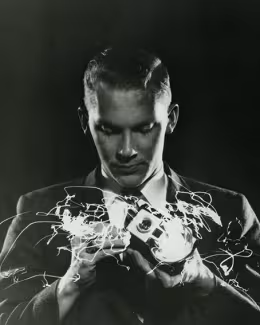
↘︎ Olivier Dadoun, physicist at LPNHE IN2P3-CNRS / Sorbonne University / Université Paris Cité - When data becomes an image: images from bubble chambers
Data from physics experiments have long taken the form of photographs. Produced by the millions, these images now lie dormant in laboratory archives. This presentation explores their restoration, digitization, and revitalization, at the intersection of the history of science and the history of photography.
↘ André Gunthert, associate professor at the École des hautes études en sciences sociales (EHESS, Paris), director of the Center for the History and Theory of the Arts (CRAL-CEHTA), and research associate at the Marc Bloch Center at Humboldt University in Berlin
Over the past quarter-century, we have witnessed the photographic medium come into conflict with digital imagery, virtual reality, and, finally, AI-generated imagery. Often described as heralding the “death of photography,” these new images have found their place in artistic practice without undermining the power of photography to attest to the fact that “it happened.” On the contrary, photography has emerged from this evolution stronger than ever, establishing its stylistic signature as a model. To understand the significance of this development, we must examine the essential contribution of optical realism to the rise of media cultures.
Moderated by Danielle Leenaerts, Lecturer, Department of Art History and Archaeology, University of Namur and Free University of Brussels (Belgium)
↘︎ Ibrahima Mahamadou, Ph.D. In Sociocultural and Visual History, researcher, University of Maroua (Cameroon)
This paper proposes to shift the focus on photography in Cameroon by examining not only the images themselves but also the conditions under which they are produced, circulated, and used, from the colonial period to the digital age. Far from a linear or aestheticized history, the aim is to analyze the multiple material aspects (media, techniques, archives) and social practices (ritual, political, and commemorative uses) that shape the status of the image. The goal is to contribute to a social and cultural history of photography, attentive to transcolonial circulations and contemporary reconfigurations, in order to renew analytical categories and conceive of a plurality of objects and approaches, in line with the epistemological challenges of the broader field.
↘ Elise Voyau, Assistant Professor and Postdoctoral Researcher, Kanagawa University (Japan)
This presentation examines how photographers and critics addressed the question of authorship during the pivotal period of the late 1960s and 1970s, in a Japan marked by major protest movements. By analyzing collective practices within independent spaces, as well as theoretical texts published in journals, it will seek to reveal the political implications of this issue, which—with its debates and paradoxes—held the hope of an alternative to the capitalist system of our contemporary societies.
↘ Sophie Guignard, Ph.D. In Art History, University of Quebec at Montreal (Canada)
Through a selection of catalogs from group exhibitions by Indigenous photographers held in the United States and Canada since the 1980s, this paper explores how these publications help to construct a situated history of Indigenous photography. It examines the methodological potential of group exhibition catalogs for studying photographic histories that have been overlooked by the dominant history of the medium. It then analyzes what Indigenous and decolonial studies contribute to our understanding of Indigenous photographic perspectives.
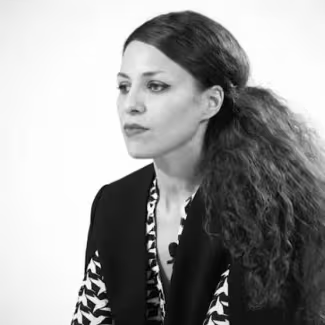
↘︎ A documentary, sound, and visual performance by Halida Boughriet - Runtime: 45 min. - From the series The Archipelago of the Besieged
The Colonial Archives Court Remains Open she examines the colonial archive as an instrument of bodily governance: it determined what could be seen, named, or erased. Halida Boughriet, playing the role of a lawyer, represents the civil party and calls the archive to the stand as both evidence and a mechanism of proof. Her photomontages open up a critical reading—from Algeria to Germany, from France to Senegal—and make room for resistance. Not a closure: an opening.
Performance script, manipulation, and acting; creation of the photomontage archives and video production: Halida Boughriet | Voice-over: Mathieu Pirro | Sound and video engineering: Quentin Balpe










Biography