Livia Melzi
Biography

Livia Melzi
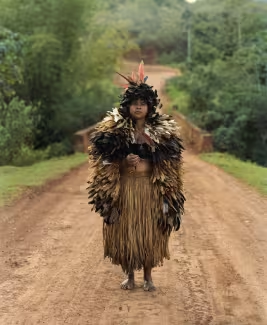
This project traces the history of eleven sacred cloaks belonging to the Tupinamba Indian tribe that were taken from Brazil during the early centuries of its colonization.
These coats were worn during cannibalistic rituals, a warlike practice that formed the cultural foundation of this tribe, which was based on vengeance. The theme of cannibalism—particularly since the publication of the *Manifesto Antropófago* (1928) written by Oswald de Andrade— permeates the Brazilian imagination as a realm capable of accommodating a variety of artistic expressions, questioning Brazilian identity and its encounter with the other.
The research encompasses a diverse collection of objects: an ongoing photographic series of these eleven coats in their current conservation context, their archival records, a series of research notebooks, and other images related to the Western history of these artifacts. These elements serve as a source of reflection and inspiration for constructing various visual narratives and questioning the persistence of certain power structures in the contemporary world.
The conclusion of this research focuses on the development of a photographic dialogue with Glicéria, a Tupinambá indigenous leader who, since 2019, has been working to reclaim her people’s identity—a process in which coats play a central role. It is through a collection of photographic archives that the craft of making coats is passed down and restored to the Tupi descendants. Glicéria uses this material and also produces her own images.
In a bold move, she presents her own visual narrative on “ the Grand Comeback of the Tupinambá Coat ».
Biography