Margaux Lavernhe
Biography

Margaux Lavernhe
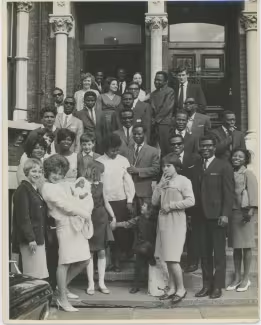
Group Portraits of Africans in England in the 1960s
This project examines the development of an aesthetic of home within West African diaspora communities in London during the 1960s.
The decade was marked by a paradox: on the one hand, the tightening of immigration policies toward people from the former British colonial empire; on the other, the first signs of a multiculturalism for which London would become, over the next two decades, a global capital.
While the Caribbean presence, its cultural expressions, and the tensions it creates in the definition of “Britishness” have been extensively addressed in works on social, cultural, and visual history, fewer studies have specifically examined West African migration, primarily from Nigeria and Ghana. However, the creation of a visual narrative by African communities in England in the 1960s was based on new photographic aesthetics of group portraiture.
This project will explore the issue of collective representations in the African diaspora experience through the concept of “home,” understood both as a relationship to space and as a symbolic construct. Building on the idea that photographs taken in domestic settings are produced, viewed, and circulated—not only to represent home, but to bring it into being—Margaux Lavernhe draws on a previously unpublished photographic corpus that stages African togetherness, with the aim of enacting the idea of home within a diasporic context.
Biography