Marine Leleu
Biography
7 avr. → 18 juin 2023
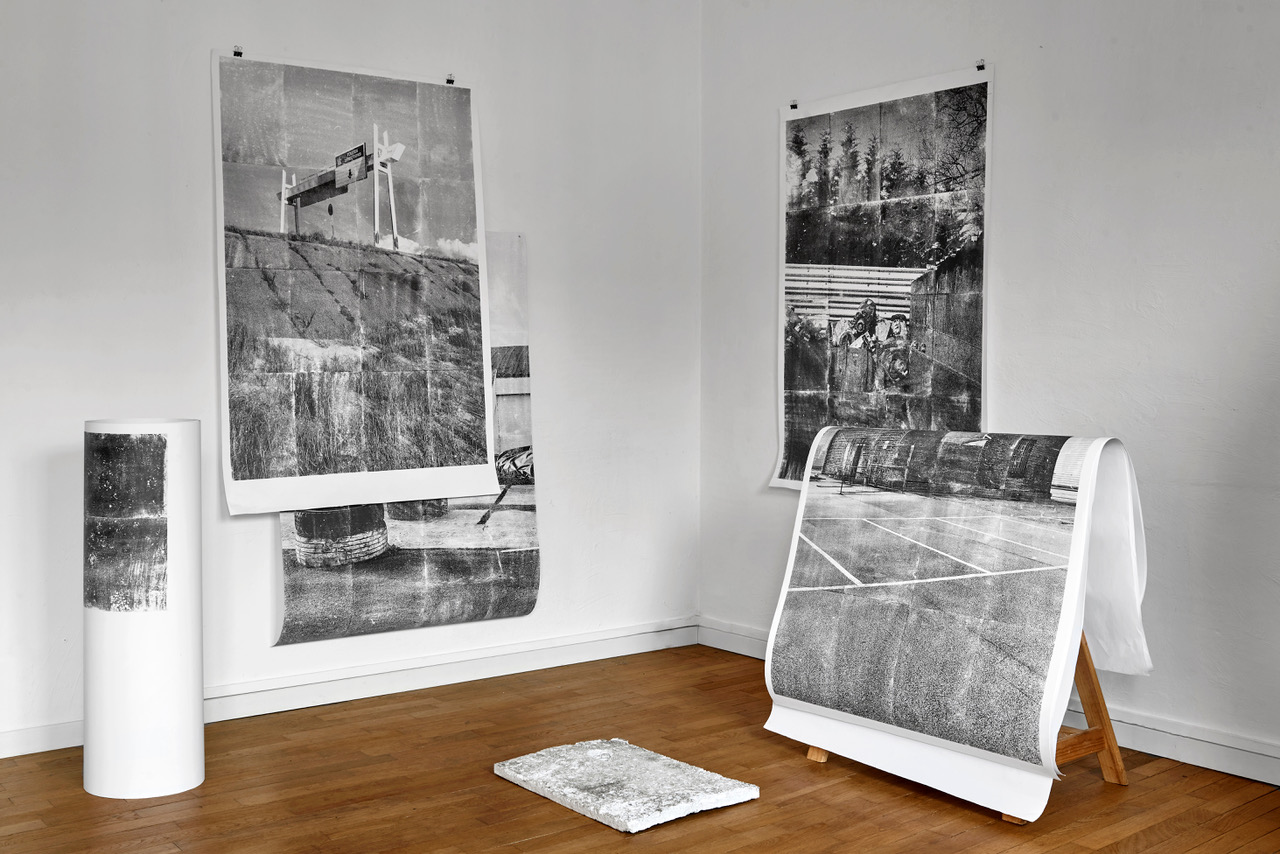
The spaces that Marine Leleu documents have no particular characteristics. On the outskirts of cities, in an area that is no longer quite the countryside, the zone she covers has no boundaries; it is a boundary in and of itself.
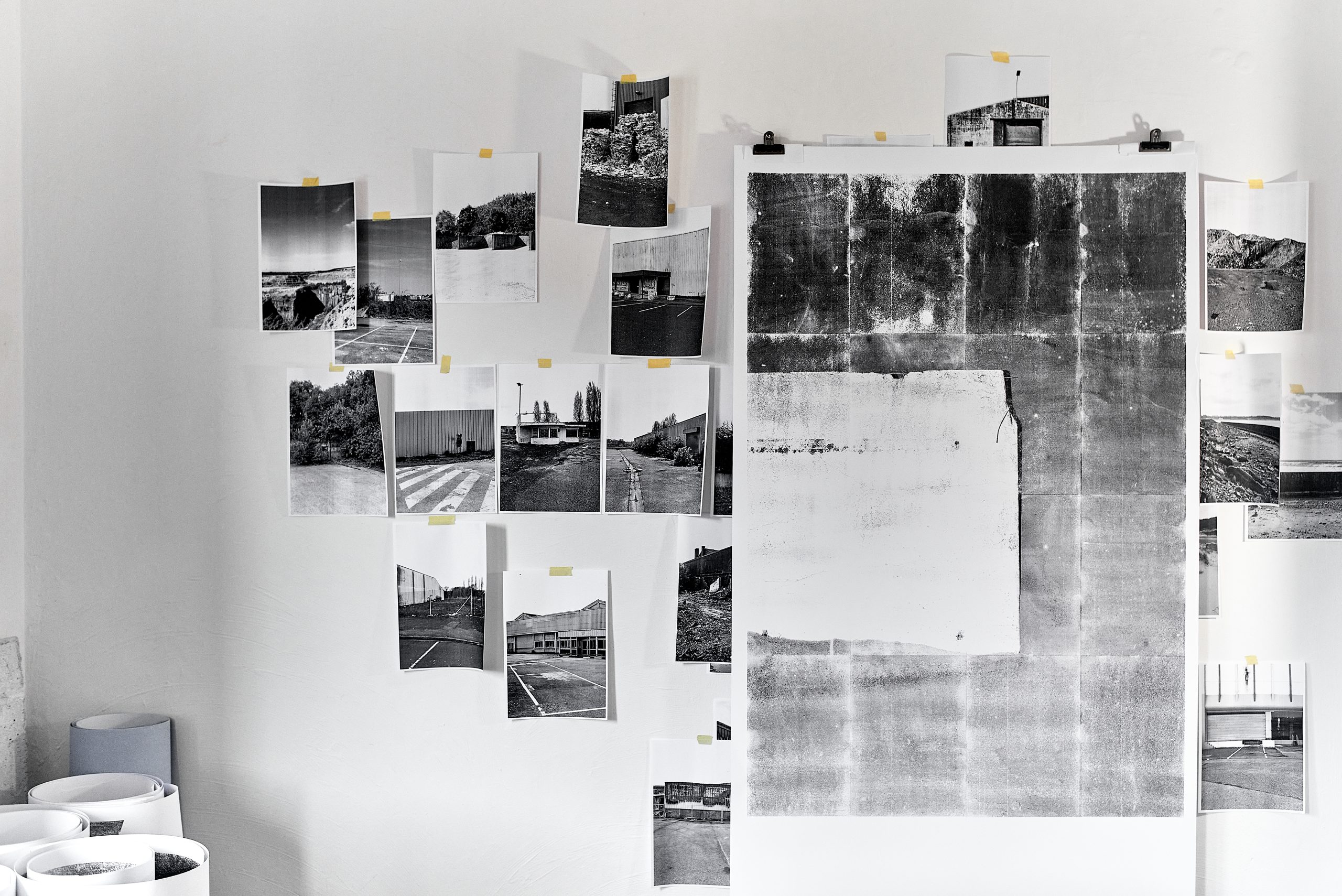
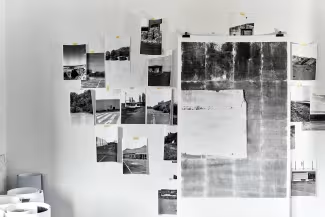
Her constantly expanding database includes, in particular, landscapes from the Nord and Pas-de-Calais regions, though they may come from anywhere in Europe. Sometimes the same landscape is captured at different times. The photographer rigorously applies this documentary approach, which characterized the 1851 heliographic mission and the DATAR photographic mission in 1984.
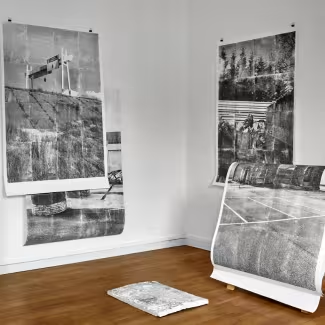
Beyond simply mapping French territory, Marine Leleu documents changes in infrastructure and the abandonment of utilitarian architecture; through her images, she brings to life the “obsolete ruins” categorized by essayist Bruce Bégout. Her photographs, which circulate from one publication to another and are transposed from one exhibition to another, exist through their physicality and the process of transfer.
By reusing paper and playing with both the idea of copying and the alterations that arise from the transfer process, the artist works to subvert clichés and to reconstitute these liminal spaces. At a time when various laws seek to regulate the impact of human activities on land and the artificialization of soil, Marine Leleu invites us to see, through her gestures, the beginning of an area’s regeneration and, through her images, a space for healing.
Text written by Henri Guette
Photography credits: Marine Leleu
Biography